


 +86 15913754357
 sales@xirotech.cn

How to Calculate Mechanical Powder Press Tonnage?
 Release time:2026.03.19
Quick Answer
The required tonnage of a mechanical powder compacting press is determined by:
Part projected area
Material compaction pressure
Friction conditions
Safety factor
Engineering Formula: F (kN) = Σ(Aᵢ × Pᵢ) × 0.1 × Kf × S
Where:
Aᵢ = projected area (cm²)
Pᵢ = compaction pressure (MPa)
Kf = friction correction factor (1.1–1.3)
S = safety factor (1.2–1.5)
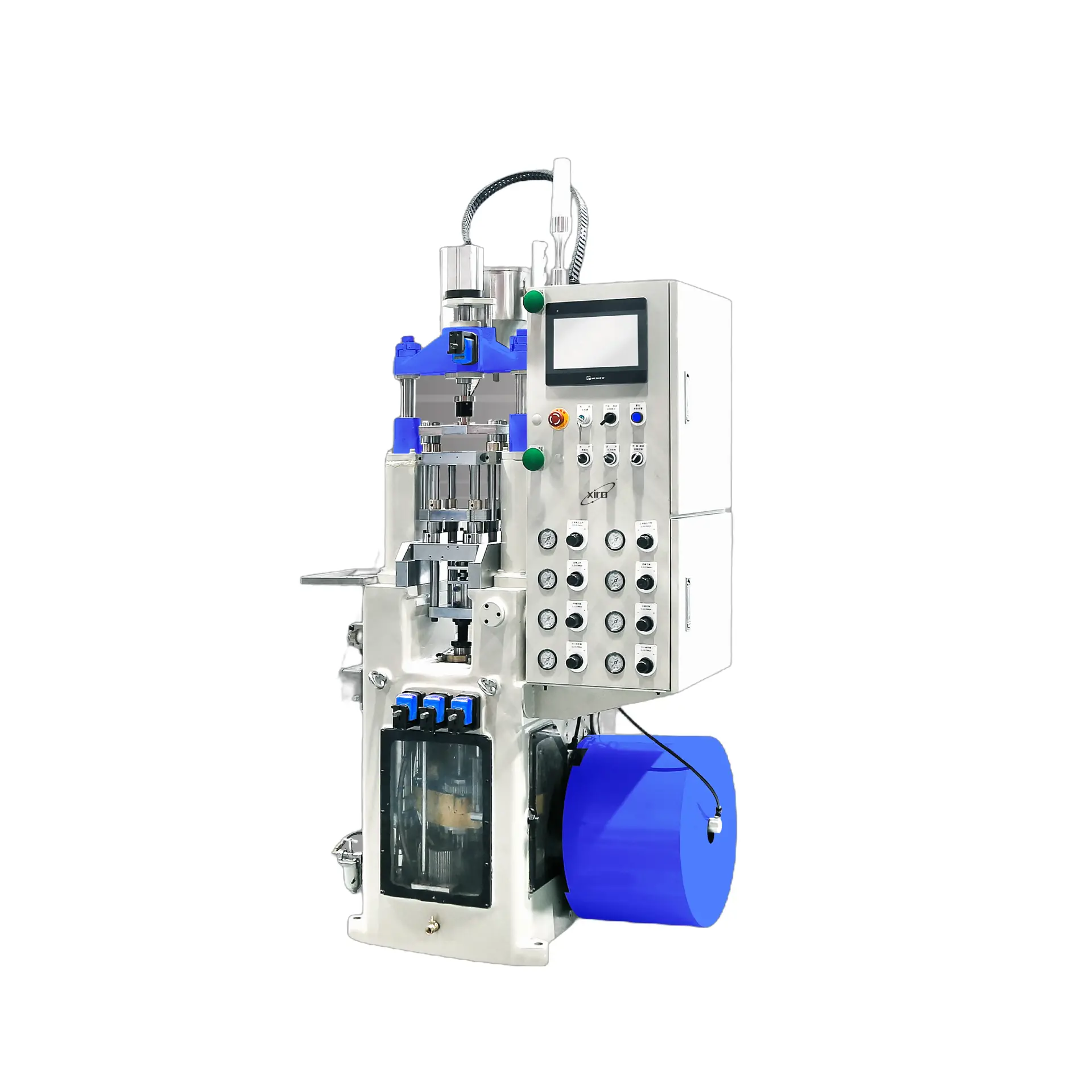
This guide provides calculation methods, real examples, and engineering insights to help you accurately select the right powder compaction press.
1. Why Tonnage Calculation Is the First Step in Machine Selection
In powder metallurgy, pressing force directly determines:
Green density
Dimensional consistency
Final mechanical strength
If tonnage is too low:
Insufficient density
Unstable shrinkage after sintering
Cracking or difficult ejection
If tonnage is too high:
Higher equipment cost
Energy waste
Accelerated die wear
Accurate tonnage calculation is the foundation of correct press machine selection.
2. Tonnage Calculation Formula Explained
2.1 Engineering Model (Real Production Scenario)
Unlike simplified formulas, actual production must consider:
Multi-level geometry
Die wall friction
Pressure transmission loss
Therefore:
F_total = (A1×P1 + A2×P2 + …) × Kf × S
[Expert Insight] Why Tonnage Isn't Constant in Mechanical Presses
In theoretical calculations, we obtain the required static force $F$. However, in the actual operation of a mechanical powder compacting press (such as toggle or crank types), the Nominal Tonnage is only achieved near the Bottom Dead Center (BDC).
Pressure Stroke Limitation: Mechanical presses rely on flywheel energy dissipation, and the force output follows a sine-like curve. If the actual Pressing Point occurs too far from the BDC (e.g., due to high fill depth or a large compression ratio), the actual output force may only be 60%-70% of the rated nominal tonnage.
Frame Deflection & Rigidity: Operating consistently at the limit of the machine’s capacity causes micro-elastic deformation (flex) in the frame. This not only leads to inconsistent green density but also accelerates tool chipping and edge wear.
2026 Selection Advice: We recommend keeping the calculated $F$ within 80% of the machine's rated capacity. This provides a "rigidity bonus" that compensates for process fluctuations and extends the service life of both the press and the tooling.
2.2 How to Calculate Projected Area
Projected area refers to the area perpendicular to the pressing direction.
Circular part:
A = π × (D/2)²Rectangular part:
A = Length × WidthRing-shaped part:
A = π × (D_outer² − D_inner²) / 4
2.3 How to Determine Compaction Pressure (P)
Compaction pressure depends on:
Material type (iron, copper, carbide, ceramic)
Target density
Powder characteristics
Reference Values (Industry Standard)
| Material | Density | Pressure (MPa) |
| Iron (low density) | 6.2–6.8 | 400–500 |
| Iron (medium density) | 6.8–7.2 | 500–650 |
| Iron (high density) | 7.2–7.6 | 650–800 |
| Copper | 7.0–7.8 | 300–500 |
| Stainless steel | 6.0–6.8 | 500–700 |
| Carbide | 11.0–13.0 | 200–350 |
| Ceramic | 3.5–5.0 | 80–150 |
Important:Compaction pressure is not constant. Always verify using:
Pressure–Density curve
Trial pressing
2.4 Friction Correction Factor (Kf)
| Condition | Kf |
| Good lubrication | 1.05–1.1 |
| Normal production | 1.1–1.2 |
| Thin wall / high friction | 1.2–1.3 |
2.5 Safety Factor (S)
Simple parts → 1.2
Medium complexity → 1.3
Complex geometry → 1.4
New development → 1.5
3. Step-by-Step Calculation Examples
Case 1: Iron Powder Gear
Input:
Outer diameter: 60 mm
Inner diameter: 12 mm
Material: Iron powder (6.8 g/cm³)
Shape: Medium complexity
Step 1: Area
A = 27.13 cm²
Step 2: Pressure
P = 550 MPa
Step 3: Safety factor
S = 1.3
Step 4: Base force
F = 1940 kN
Step 5: Add friction (Kf = 1.15)
F ≈ 2230 kN
Recommended: 250-ton mechanical powder press
Case 2: Carbide Insert
Area = 2 cm²
Pressure = 300 MPa
S = 1.2
F = 72 kN
Recommended: 10-ton precision press
Note: Carbide requires high machine rigidity and stable pressing curve.
Case 3: Ceramic Bushing (Thin Wall)
Area = 3.93 cm²
Pressure = 120 MPa
S = 1.4
F ≈ 66 kN
Recommended: 10–20 ton press
Risk is not H/D ratio, but:
Thin wall structure
Friction-induced density gradient
4. Common Mistakes in Tonnage Calculation
Estimating based on part weight
Ignoring safety factor
Not summing multi-level forces
Confusing nominal tonnage with actual force
Ignoring press force vs stroke curve
Field Notes: Critical Factors Affecting Real-world Pressing Force
Even if your formulaic calculation is accurate, the following three real-world scenarios can lead to insufficient pressure or equipment damage:
Ejection Vacuum Effect: When high-speed pressing large-area thin parts (like friction plates or large washers), a powerful vacuum suction can form between the die and the part during ejection. This requires the Ejection Tonnage to have an additional 5%-10% margin to prevent part delamination or "capping."
Thermal Expansion & Friction Compensation: After several hours of continuous production, the temperature rise in the die set causes clearances to tighten. The friction coefficient $K_f$ can surge from an initial 1.1 to over 1.3. If the tonnage selection is too tight, scrap rates (cracks or burrs) will be significantly higher in the afternoon than in the morning.
Multi-level Interference: For complex multi-level components, powder does not just move vertically; it generates lateral flow and internal stress. In these cases, the projected area $A$ cannot be simply summed up. Instead, the instantaneous peak pressure of each stage must be audited based on the independent movement sequence of the punches.
5. Critical: Press Force vs Stroke Curve
Mechanical presses do NOT deliver full tonnage throughout the stroke.
Maximum force occurs near bottom dead center
Effective pressing zone is limited
Always verify:
Required force at actual compaction position
6. From Tonnage to Full Machine Selection
Tonnage is only part of the selection process.
You must also verify:
Filling height
Ejection stroke
H/D ratio
Machine speed
Force–stroke curve
7. Mechanical vs Servo Mechanical Powder Press
Mechanical Powder Press
Fixed motion curve
High speed
Lower cost
Servo Mechanical Powder Press
Programmable motion
Adjustable speed and pressure
Better density uniformity
Ideal for:
Complex PM parts
High precision components
Automotive & electronics industries
8. Quick Calculation Formula
Tonnage (Ton) ≈ A × P × 0.01 × S
9. Final Engineering Insight
In real production:
Tonnage calculation is only the starting point.
Final selection must be validated through:
Trial pressing
Tooling design
Press force curve verification
Need Help Selecting the Right Powder Press?
Choosing the correct powder compaction machine is not just about tonnage—it requires real engineering validation.
At XIRO, we provide:
Custom machine configuration
Free technical consultation
Trial pressing support
Complete powder compaction solutions
Machine recommendation
Tonnage calculation support
Quotation within 24 hours
Engineering FAQ
1. 1. How to calculate powder press tonnage? ▼
2. 2. What is compaction pressure in powder metallurgy? ▼
3. 3. How to choose the right powder press machine? ▼
4. 4. What is the difference between mechanical and servo powder press? ▼
5. 5. Why is friction important in powder compaction? ▼